Introduction
Core cutting and drilling are essential in Dubai’s construction sector — used for creating openings in concrete walls, slabs, and floors for plumbing, wiring, HVAC, and structural work.
However, due to the use of high-powered machinery and diamond-tipped tools, these operations come with serious safety risks if not managed properly.
To maintain the highest level of safety and quality, all core cutting activities in Dubai must follow Dubai Municipality regulations, Occupational Safety and Health (OSHAD) standards, and international safety guidelines (OSHA & ISO).
This guide explains the key safety standards and best practices followed by professional core cutting contractors in Dubai.
⚖️ 1. Regulatory Safety Framework in Dubai
Core cutting safety is governed by several key authorities and standards:
- Dubai Municipality – Environment, Health & Safety (EHS) Department
- OSHA (Occupational Safety and Health Administration, USA)
- ISO 45001: Occupational Health and Safety Management Systems
- Dubai Civil Defense (DCD) for high-rise and indoor safety
- Construction Site Safety Code of Practice (Dubai)
Every licensed contractor in Dubai must comply with these standards before performing any core cutting or concrete drilling work.
🧰 2. Safety Equipment and PPE
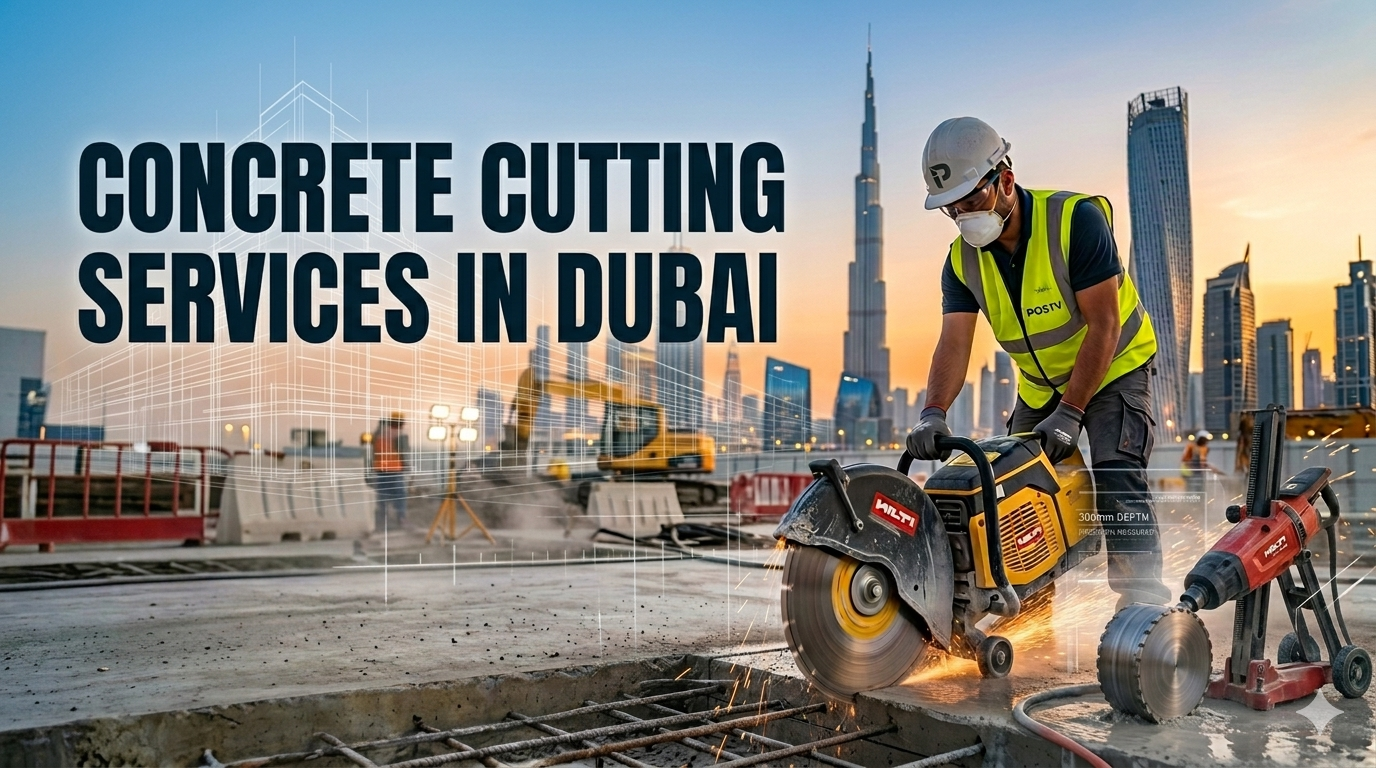
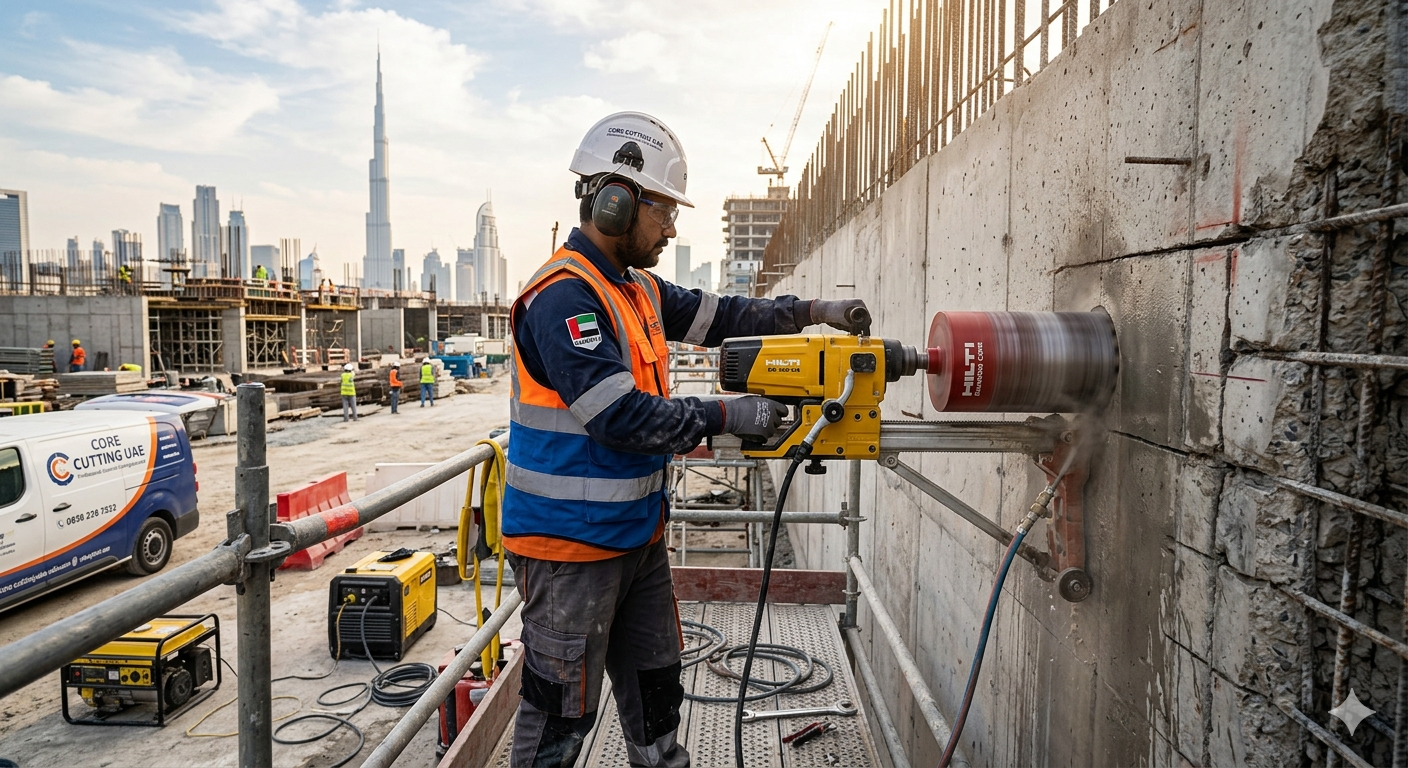
All core cutting technicians must wear Personal Protective Equipment (PPE) to protect against dust, debris, and machinery hazards.
Mandatory PPE Includes:
- 🪖 Safety Helmet – Protects the head from falling objects
- 👓 Safety Goggles – Prevents eye injuries from flying dust or particles
- 🎧 Ear Protection – Reduces exposure to machine noise
- 🧤 Cut-Resistant Gloves – Ensures grip and protection
- 👷♂️ Reflective Safety Vest – Enhances visibility on site
- 🥾 Steel-Toe Safety Boots – Prevents foot injuries from heavy equipment
PPE compliance is non-negotiable under Dubai’s EHS regulations.
⚙️ 3. Safe Equipment Operation
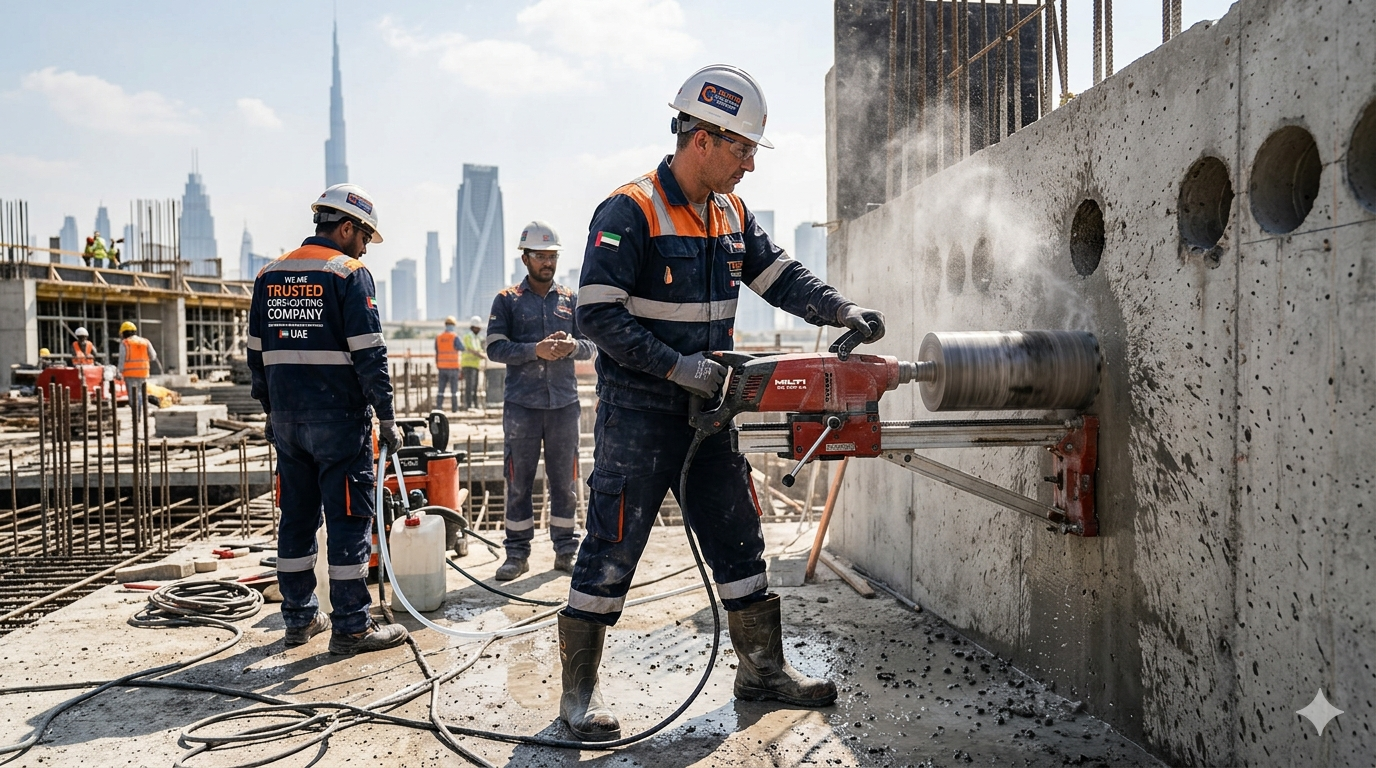
Core cutting involves the use of diamond drilling machines, wall saws, and slab cutters. Safe operation of these tools is critical.
Operator Safety Rules:
- Machines must be inspected before every use.
- Use only certified, well-maintained equipment (e.g., Hilti, Bosch, Husqvarna).
- Ensure proper anchoring or vacuum mounting before drilling.
- Always apply water cooling to prevent overheating and dust emission.
- Keep electrical cables and water sources separate to avoid electric shock.
- Only trained and certified operators may perform drilling.
💧 4. Dust & Noise Control
Dubai’s EHS and environmental policies emphasize dust-free and noise-controlled operations.
Professional contractors use:
- Wet drilling techniques to suppress dust.
- Vacuum systems to collect debris.
- Sound barriers or low-noise machinery to meet community noise limits (as per Dubai Municipality guidelines).
This ensures compliance with environmental and health regulations.
🚫 5. Site Safety and Work Area Control
Before starting any core cutting project, the area must be properly secured.
Site Control Procedures:
- Isolate the drilling zone with safety barriers or caution tape.
- Display warning signs (e.g., “Core Cutting in Progress”).
- Ensure no unauthorized personnel enter the area.
- Maintain clear communication between workers via radios or hand signals.
- Have first aid kits and fire extinguishers nearby.
⚡ 6. Electrical and Water Safety
Core cutting machines are usually electric or hydraulic, requiring strict electrical safety practices.
- Inspect cables for damage or exposed wires.
- Use ground-fault circuit interrupters (GFCIs).
- Prevent water contact with electrical connections.
- Turn off the main power supply before maintenance.
🧱 7. Structural and Environmental Safety
Before drilling, engineers must verify that the target area is structurally safe.
Drilling in load-bearing elements without assessment can cause cracks, vibration damage, or structural instability.
Best Practices:
- Perform structural analysis before coring.
- Use low-vibration equipment.
- Avoid drilling near post-tension cables or rebar.
- Obtain Dubai Municipality permits for major structural modifications.
🧑🔧 8. Training and Certification
All operators and site supervisors must complete certified training in:
- Core cutting and drilling operations
- Equipment handling and maintenance
- First aid and fire safety
- Risk assessment and emergency response
Professional companies in Dubai often provide in-house safety workshops to maintain compliance.
✅ 9. Post-Work Inspection and Cleanup
After core cutting, the area must be inspected for:
- Cracks or structural damage
- Dust or debris accumulation
- Water leaks or residue
Proper cleaning ensures site readiness for the next stage of construction and compliance with Dubai Municipality inspection standards.
🏁 Conclusion
Safety is the foundation of every core cutting project in Dubai.
Following the Dubai Municipality EHS guidelines, OSHA standards, and proper PPE usage ensures every operation is efficient, dust-free, and risk-free.
Hiring a licensed and safety-certified company like Core Cutting UAE guarantees that all drilling work is done with precision, compliance, and care for worker and structural safety.