Core Cutting: The Complete Guide to Precision Concrete Cutting
Introduction to Core Cutting
Core cutting is one of those construction techniques that most people never notice, yet it plays a massive role in shaping modern buildings and infrastructure. Imagine trying to run plumbing pipes, electrical conduits, or HVAC systems through solid concrete without cracking or weakening the structure. Sounds like a nightmare, right? That’s exactly where core cutting steps in like a skilled surgeon, making clean, precise holes exactly where they’re needed—no unnecessary damage, no structural chaos.
At its core (pun intended), core cutting is a specialized method of drilling perfectly round holes in concrete, asphalt, masonry, or stone. Unlike traditional breaking or hammering methods, it focuses on precision rather than brute force. This makes it a preferred choice in projects where accuracy, safety, and structural integrity are non-negotiable. Whether it’s a high-rise building, a bridge, or a residential renovation, core cutting quietly ensures everything fits together like a well-planned puzzle.
What makes core cutting especially fascinating is how it blends engineering, physics, and craftsmanship. Diamond-tipped core bits rotate at controlled speeds, slicing through even reinforced concrete as if it were butter—well, extremely stubborn butter. Water or air is often used to control dust and heat, keeping the process efficient and environmentally safer.
In today’s construction world, where timelines are tight and mistakes are costly, core cutting has become more than just a technique—it’s a necessity. From small residential jobs to massive infrastructure projects, its importance cannot be overstated. Let’s dive deeper and understand what core cutting really is, how it works, and why it has become an indispensable part of modern construction.
Understanding Core Cutting
What Is Core Cutting?
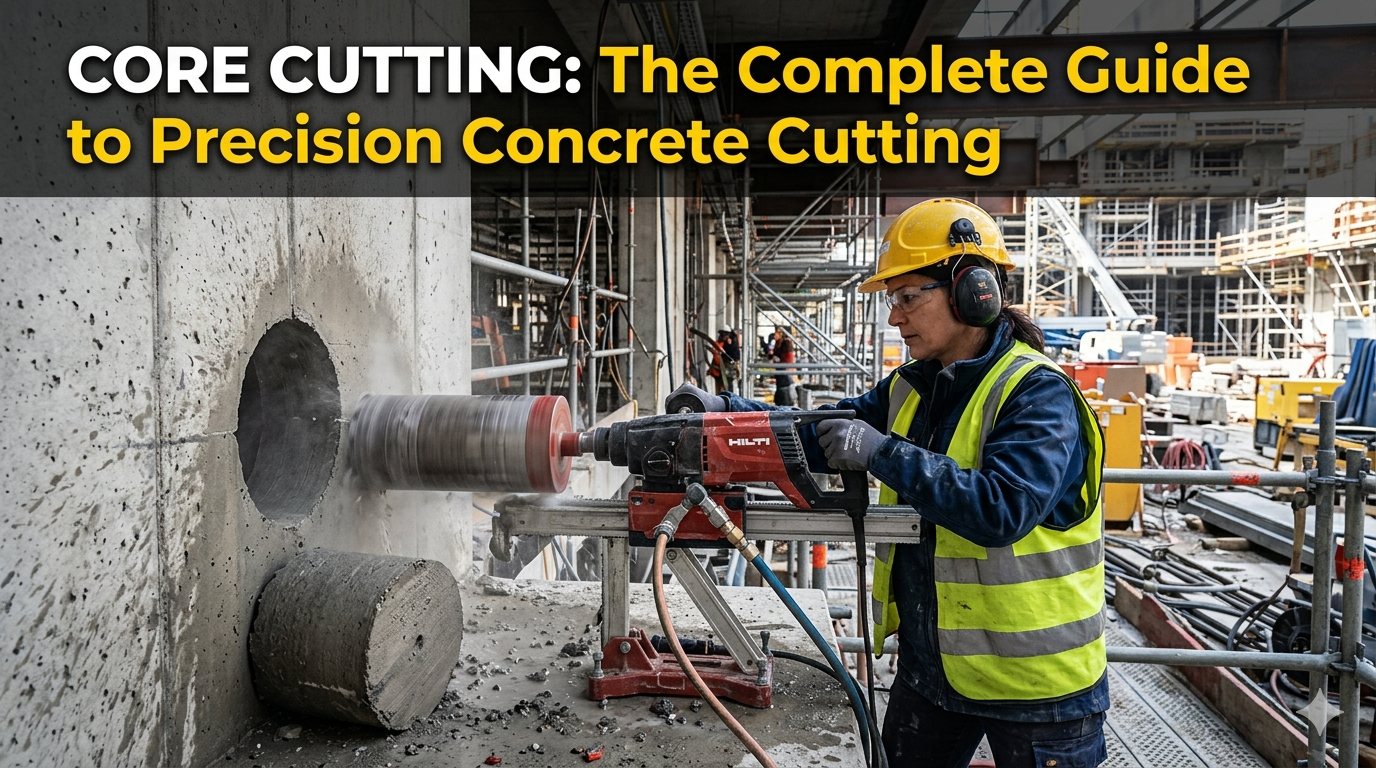
Core cutting, also known as core drilling, is a method used to create precise circular openings in hard surfaces such as concrete, reinforced concrete, asphalt, brick, and stone. These openings can range from small diameters for wiring and anchor bolts to large holes for plumbing pipes, ventilation ducts, and drainage systems. Unlike surface-level cutting, core cutting goes deep—sometimes several feet—without compromising the surrounding structure.
Think of core cutting like using a cookie cutter on a cake instead of smashing it with a spoon. The result is clean, controlled, and exactly the size you need. This precision is achieved using cylindrical drill bits embedded with industrial-grade diamonds. Diamonds are chosen not for luxury, but for their unmatched hardness, allowing them to grind through tough materials efficiently.
One of the standout features of core cutting is its versatility. It can be done horizontally, vertically, or even at an angle, depending on project requirements. Whether it’s a wall, floor, or ceiling, core cutting adapts effortlessly. This flexibility makes it a go-to solution for contractors working in complex environments.
Another important aspect is vibration control. Traditional methods like jackhammering create intense vibrations that can lead to micro-cracks in nearby concrete. Core cutting, on the other hand, produces minimal vibration, preserving the integrity of the structure. This is especially crucial in occupied buildings, hospitals, or heritage structures where damage simply isn’t an option.
In simple terms, core cutting is the art and science of making holes where holes are needed—cleanly, safely, and accurately. It’s not just about drilling; it’s about doing it right the first time.
The Science Behind Core Cutting Technology
Behind the smooth operation of core cutting lies some serious science. At the heart of the process is abrasion, not impact. Unlike hammer drills that rely on forceful blows, core cutting uses rotational motion combined with diamond abrasives to grind through material layer by layer. This approach significantly reduces stress on the surrounding area.
Diamond core bits are engineered with segments containing synthetic diamonds bonded with metal alloys. As the bit rotates, these diamonds scrape away the concrete surface. Over time, the metal bond wears down, exposing new diamond edges—a self-sharpening effect that keeps the bit effective throughout its lifespan.
Water plays a critical role in wet core cutting. It cools the bit, reduces friction, and suppresses dust. This not only improves cutting efficiency but also protects workers from inhaling harmful silica dust. In dry core cutting, advanced vacuum systems are used to manage dust, especially in indoor or sensitive environments.
Torque, rotational speed, and pressure must be carefully balanced. Too much pressure can cause the bit to bind or wear prematurely, while too little pressure slows the process. Skilled operators understand this balance intuitively, adjusting parameters based on material density and reinforcement levels.
The presence of steel reinforcement adds another layer of complexity. When the bit encounters rebar, the diamonds grind through the steel without skipping a beat. This seamless transition between materials is one of the reasons core cutting is so reliable.
In essence, core cutting is a beautiful blend of material science, mechanical engineering, and operator skill. It’s precision powered by physics—and when done correctly, the results speak for themselves.
History and Evolution of Core Cutting
Early Concrete Cutting Methods
Before core cutting became the refined, precise technique we know today, creating openings in concrete was more of a battle than a process. Early construction relied heavily on brute-force methods like chiseling, hammering, and manual drilling. These approaches were time-consuming, labor-intensive, and often destructive. If a hole needed to be made, workers would literally break their way through concrete, hoping not to damage surrounding areas. Accuracy was more of a lucky outcome than a guaranteed result.
Back then, reinforced concrete posed an even bigger challenge. Steel rebars embedded inside concrete would dull tools quickly, forcing frequent replacements and slowing progress to a crawl. Noise levels were extreme, dust filled the air, and vibrations often caused cracks that compromised the structural integrity of buildings. In many cases, workers had to repair the damage caused by making the hole itself—a frustrating cycle that wasted both time and money.
As cities grew and buildings became taller and more complex, these crude methods simply couldn’t keep up. Architects and engineers needed a way to create precise openings without weakening structures. The demand for cleaner, safer, and more accurate cutting methods pushed innovation forward.
The introduction of mechanical drilling machines marked a turning point. While still limited in precision, they were a step away from pure manual labor. However, without advanced cutting materials, these machines struggled against hardened concrete and steel reinforcement.
These early challenges laid the groundwork for modern core cutting. They highlighted the need for precision, efficiency, and safety—principles that now define the industry. Without these initial struggles, the evolution of core cutting might never have happened.
Modern Advancements in Core Cutting
Fast forward to today, and core cutting looks like a completely different world. Modern core cutting is driven by technology, precision engineering, and a deep understanding of materials. The biggest breakthrough came with the introduction of diamond technology. Synthetic diamonds, specifically designed for industrial use, revolutionized the cutting process by offering unmatched durability and cutting power.
Today’s core cutting machines are powerful yet surprisingly precise. Hydraulic, electric, and pneumatic systems allow operators to control speed, torque, and pressure with incredible accuracy. This means cleaner cuts, faster completion times, and significantly less wear on equipment.
Automation has also changed the game. Rig-mounted systems ensure perfectly straight holes, even at deep depths. Laser guides and digital measurement tools help operators align drills with millimeter-level accuracy. This is especially important in complex projects where even a small deviation can cause major installation issues.
Environmental and safety advancements are equally impressive. Modern wet cutting systems drastically reduce dust and heat, while advanced vacuum attachments make dry cutting safer indoors. Noise reduction technology has also made core cutting suitable for occupied buildings like hospitals and offices.
In essence, modern core cutting is no longer just a construction task—it’s a precision operation. It reflects how far the industry has come, transforming what was once destructive into something almost surgical. And with technology continuing to evolve, the future looks even more precise.
Types of Core Cutting
Handheld Core Cutting
Handheld core cutting is the most flexible and mobile form of core drilling. As the name suggests, the operator manually holds the machine, making it ideal for smaller jobs or locations where space is limited. This method is commonly used for drilling small-diameter holes for electrical wiring, plumbing lines, or anchor bolts.
One of the biggest advantages of handheld core cutting is accessibility. It can be used in tight spaces, awkward angles, and elevated areas where rig-mounted machines simply won’t fit. For renovation projects or minor modifications, handheld drilling is often the fastest solution.
However, this flexibility comes with limitations. Because the machine is manually operated, achieving perfect alignment requires skill and experience. Larger diameter holes or deep drilling can be physically demanding and less precise compared to rig-mounted systems.
Despite these challenges, handheld core cutting remains a staple in the industry. When used correctly, it delivers clean results with minimal setup time. It’s the go-to choice for quick, on-the-spot drilling tasks that don’t require heavy-duty equipment.
Rig-Mounted Core Cutting
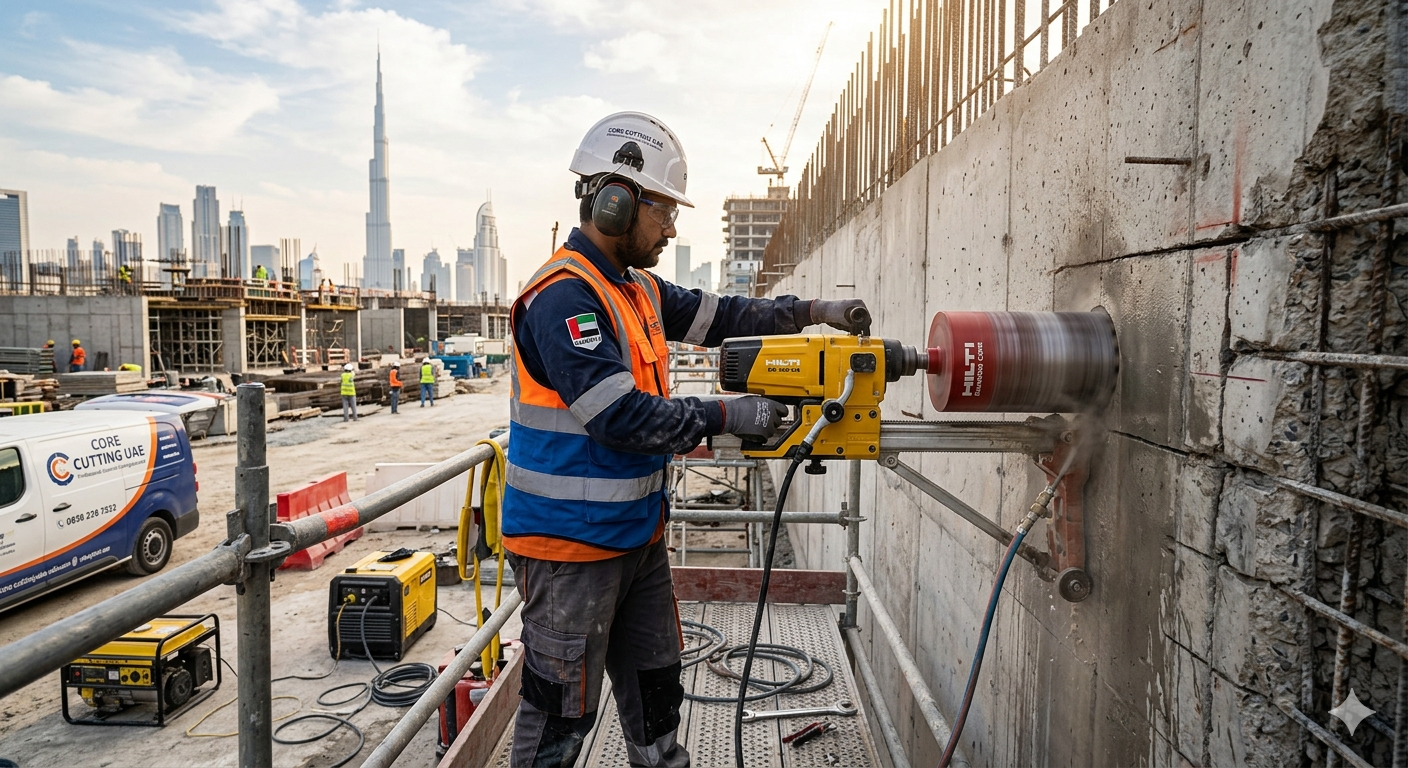
Rig-mounted core cutting is all about precision and stability. In this method, the drilling machine is mounted on a fixed rig that is anchored to the surface. This setup allows for perfectly straight, consistent drilling, even at significant depths.
This type of core cutting is commonly used in large-scale projects such as commercial buildings, bridges, and infrastructure works. The rig ensures minimal vibration, which is crucial when drilling through reinforced concrete or structural elements.
Another key advantage is operator safety. Since the machine does most of the work, physical strain is greatly reduced. The rig also allows for controlled drilling speeds and pressure, extending the lifespan of the core bit.
Rig-mounted systems are ideal for large-diameter holes and repetitive drilling tasks. While setup takes longer than handheld drilling, the accuracy and efficiency gained make it well worth the effort.
Wet Core Cutting
Wet core cutting uses water to cool the core bit and suppress dust during drilling. This method is widely considered the safest and most efficient option, especially for deep or large-diameter holes.
Water acts as a lubricant, reducing friction and preventing overheating. This not only improves cutting speed but also extends the life of the diamond core bit. Additionally, wet cutting significantly reduces airborne dust, protecting workers from harmful silica exposure.
Because of these benefits, wet core cutting is commonly used in outdoor projects or areas where water management is not an issue. Proper drainage and slurry cleanup are essential to avoid mess and environmental concerns.
Overall, wet core cutting offers superior performance, cleaner cuts, and better safety, making it the preferred choice for most professional applications.
Dry Core Cutting
Dry core cutting is used in situations where water is not practical, such as indoor environments or areas with sensitive electrical systems. Instead of water, specialized vacuum systems capture dust at the source.
Modern dry core cutting tools are designed to minimize dust and heat buildup. While not as efficient as wet cutting for deep drilling, they are incredibly useful for smaller jobs and confined spaces.
Dry cutting requires careful control of speed and pressure to prevent overheating. Operators must also ensure proper ventilation and dust extraction to maintain safety.
Despite its limitations, dry core cutting provides unmatched convenience in certain scenarios, proving that there’s no one-size-fits-all approach in core cutting.
Core Cutting Machines and Tools
Core Drilling Machines
Core drilling machines are the backbone of the core cutting process. These machines come in various sizes and power configurations, designed to handle everything from light residential work to heavy industrial drilling. At first glance, they might look like oversized drills, but their internal mechanics are far more advanced.
Modern core drilling machines are engineered for precision and stability. They feature adjustable speed controls, torque regulation, and mounting options that allow operators to adapt to different materials and drilling conditions. Electric-powered machines are commonly used for indoor projects due to their quiet operation, while hydraulic and pneumatic machines dominate large-scale construction sites.
One of the most important aspects of a core drilling machine is its ability to maintain consistent rotational speed under load. This consistency ensures smooth cuts and prevents unnecessary wear on diamond core bits. Many advanced machines also include overload protection systems, which automatically shut down the motor if excessive resistance is detected.
Portability is another key factor. Lightweight handheld machines are ideal for small jobs, while heavy-duty rig-mounted machines provide unmatched accuracy for deep drilling. Choosing the right machine depends on the project’s scale, material, and required hole diameter.
In short, a reliable core drilling machine is not just a tool—it’s an investment in efficiency, safety, and quality workmanship.
Diamond Core Bits
Diamond core bits are the true heroes of core cutting. Without them, drilling through concrete and steel would be nearly impossible. These cylindrical bits are embedded with industrial-grade diamonds along their cutting edges, allowing them to grind through the hardest materials with ease.
Different core bits are designed for different applications. Some are optimized for reinforced concrete, while others perform better on asphalt, masonry, or stone. The size, segment height, and bond type all influence performance and lifespan.
A softer bond is ideal for harder materials, as it wears away faster to expose fresh diamonds. Conversely, a harder bond lasts longer when cutting softer materials. Understanding this balance is crucial for efficient drilling.
Proper maintenance of diamond core bits is equally important. Cleaning them after use, avoiding overheating, and using the correct drilling technique can significantly extend their lifespan.
When paired with the right machine and operator skill, diamond core bits deliver clean, precise holes that meet exact specifications every time.